The Liberation of Paris at Montparnasse
Planning your afternoon in Montparnasse?The tower is shut, but the Catacombs entrance is a short walk away at Denfert-Rochereau, and the old painters' quarter is best seen with someone who knows its stories. These are the tours you can book.
Compare the tours25 August 1944 at the station
Leclerc’s 2nd Armoured Division entered Paris and he set up his command post at Gare Montparnasse, the old station that stood where the tower is now. On 25 August 1944 the German surrender of Paris was formalised there: General von Choltitz signed in the presence of Leclerc and Colonel Henri Rol-Tanguy of the FFI, who co-signed. The first surrender agreement had been signed earlier that afternoon at the Préfecture de police; von Choltitz was then driven to Montparnasse, where the final act and the ceasefire orders to the German strongpoints were signed.
About an hour later General de Gaulle came to the station and received the document from Leclerc, then went on to the Hôtel de Ville. A day-by-day account is on Herodote.net. The old station was demolished in 1969; what replaced it is on the Tour Montparnasse in figures.
Rol-Tanguy’s command post
Rol-Tanguy’s own command post was underground at Denfert-Rochereau, 20 m below the street. It is now part of the museum, and the avenue outside bears Rol-Tanguy’s name. You go down by stairs only; if you cannot manage them, a 360° tablet visit shows it instead.
Visiting the museum
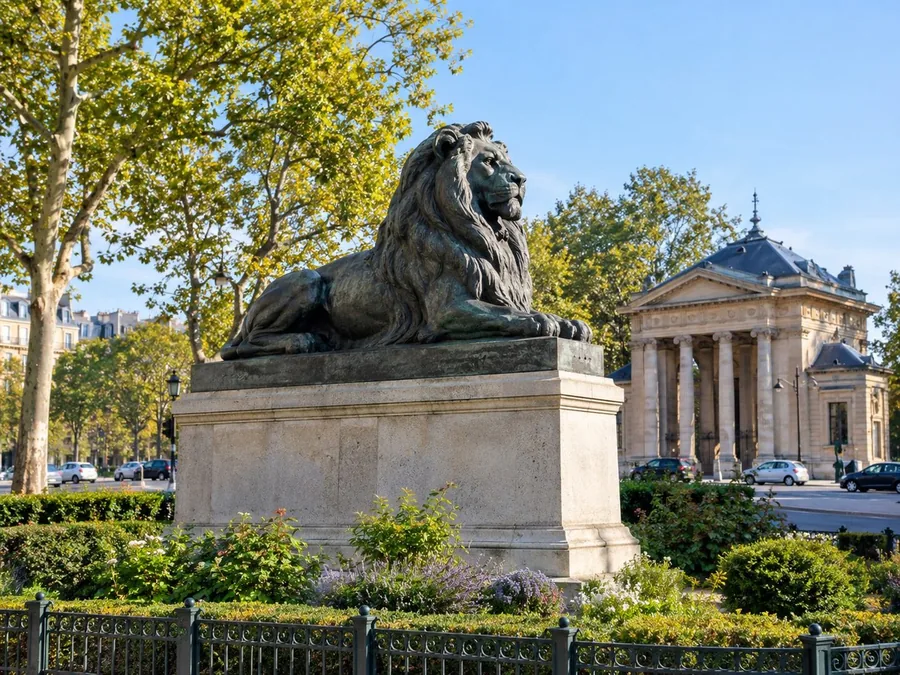
The full name is the Musée de la Libération de Paris – Musée du Général Leclerc – Musée Jean Moulin. It is at 4 avenue du Colonel Henri Rol-Tanguy, on place Denfert-Rochereau, in the stone pavilions of 1787 beside the bronze lion. It opened there on 25 August 2019, the 75th anniversary; before that it was on the Jardin Atlantique above Gare Montparnasse.
- Hours: Tuesday to Sunday, 10:00–18:00, last entry 17:30. Closed on Mondays and on 1 January, 1 May and 25 December. Check the museum’s website before you go.
- Getting there: métro 4 or 6 or RER B to Denfert-Rochereau, or buses 38, 68, 88 and 216.
- The command post: 20 m down, stairs only, with the tablet visit as an alternative.
The ticket, honestly
The permanent collection of this City of Paris museum does not need a ticket. What the ticket sold here gets you is the entrance plus the Robert Capa temporary exhibition, which runs until 20 December 2026. It is the cheapest product sold on this site. Two points before you book: after booking you must also reserve your time slot on the museum’s website, and the ticket is non-refundable. It has only two reviews, both from French visitors, both 5 stars. More on the Liberation museum, reviewed.
The Catacombs next door
The Catacombs entrance is a few steps across the square, at 1 avenue du Colonel Henri Rol-Tanguy. The Catacombs need booking too, and more urgently: timed tickets are sold online only, with no sales on site, and the slots go early. The plain audio-guide ticket rates 4.7 from 12,279 reviews and is non-refundable. How to plan the visit is on visiting the Catacombs.
I put the museum and the Catacombs on the same afternoon: I book the Catacombs slot first, then pick a museum time slot around it. From Gare Montparnasse the walk down to place Denfert-Rochereau takes about 20 minutes.
Frequently asked questions
Where was the German surrender of Paris signed?
It was formalised at Gare Montparnasse, Leclerc’s command post, on 25 August 1944. A first agreement had been signed earlier that day at the Préfecture de police.
Where is the Liberation of Paris museum?
At 4 avenue du Colonel Henri Rol-Tanguy, on place Denfert-Rochereau, right next to the Catacombs entrance. It is open Tuesday to Sunday, 10:00–18:00, and closed on Mondays.
Do you need a ticket for the Liberation museum?
Not for the permanent collection. The ticket sold here adds the Robert Capa exhibition, until 20 December 2026; you then reserve a time slot on the museum’s website.
Can I visit the museum and the Catacombs on the same day?
Yes, they are side by side. Book the Catacombs first; the options are on Catacombs tickets, compared.
Did de Gaulle go to Gare Montparnasse?
Yes. On 25 August 1944 he came to the station, received the surrender document from Leclerc, and then went on to the Hôtel de Ville.